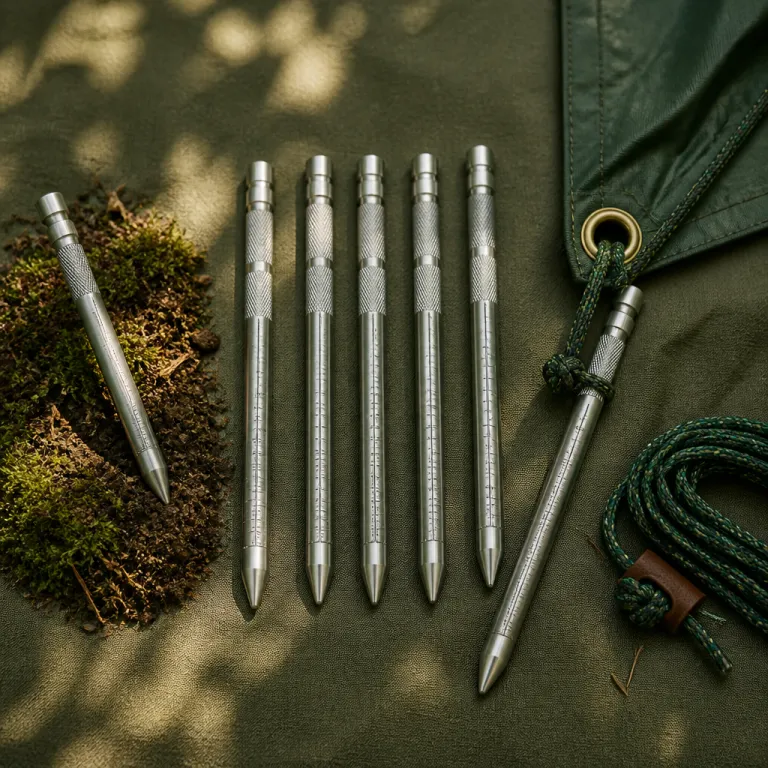
Why refined campers should care about aluminum tent stakes
Luxury campgrounds now pair designer canvas with equally refined aluminum tent stakes (often spelled aluminium tent pegs in European catalogs). When you book a premium camping tent or a titanium tent through an upscale platform, the quiet reliability of each stake often decides whether your night feels like a five star suite or a wind shaken compromise. For guests used to high thread count linens and curated amenities, the way stakes meet the ground matters more than they expect.
Aluminum tent stakes are engineered to balance low weight with high holding power, which is crucial when a large glamping tent stands on exposed terrain. Retailers such as REI Co-op and manufacturers like AceCamp and NORTENT rely on high strength aluminum alloys so that each tent stake resists bending even when driven into firm or subtly rocky soil. REI, for example, lists many Y-beam and V-beam stakes in 7000-series aluminium for added strength. This technical backbone lets luxury camp operators promise stable structures that feel as composed as an urban hotel room, even when snow or sudden gusts sweep across the site.
For travelers comparing car camping options on a premium booking website, the specification sheet for stakes is as important as the mattress description. A typical aluminum stake weighs around 0.5 ounces and measures close to 19 centimetres (about 7.5 inches), which keeps the overall weight of a lightweight tent low enough for guests who arrive with private transfers rather than hiking packs. REI’s Groundhog stake, for instance, is published at approximately 0.46 oz and 7.5 in, while MSR’s Mini Groundhog is listed at about 0.35 oz and 6 in, illustrating the general range. When a platform highlights heavy duty ground anchors with generous surface area and a refined pull cord, it signals that the property treats tent infrastructure with the same care as its spa menu.
Matching stake design to luxury campground terrain
High end campgrounds rarely sit on uniform lawns, so the choice of aluminum tent stakes must reflect varied ground conditions. On a coastal site with snow sand mixtures near the dunes, wide profile snow stakes in aluminum offer better holding power than narrow pegs that slice through loose grains. In contrast, a forest retreat with dense soil and scattered roots demands slimmer stakes that can navigate obstacles without bending or adding unnecessary weight.
When you browse a premium booking website, look for descriptions that explain how each tent stake is matched to the ground beneath your suite. Operators who specify dedicated snow stakes for winter stays, V shaped aluminum models for mixed soil, and Y shaped heavy duty designs for rocky soil show a level of engineering that aligns with luxury expectations. This attention to stake shape, cord attachment, and ground anchors is as revealing as the architectural language of the tents themselves, much like the way campground layout speaks volumes in this guide on refined tarp poles for luxury tent design.
Upscale operators often combine aluminum tent stakes with a small selection of ultralight titanium or carbon core models for specialist roles. For example, an ultralight titanium stake might secure a vestibule where every gram of weight matters, while a broader aluminum stake handles the main guyline that bears high wind loads. When a booking page explains this mix, it reassures guests that the team treats tent engineering with the same seriousness as interior design.
Comparing aluminum, titanium, and carbon stakes for premium stays
Guests who usually book suites rather than campsites may be surprised by how many stake materials appear in luxury campground descriptions. Aluminum tent stakes form the backbone of most premium setups because they combine light weight, reasonable cost, and reliable holding power across varied soil types. Titanium stakes, ultralight titanium models, and carbon core designs then play supporting roles where every fraction of an ounce counts.
For a drive up car camping experience at a luxury site, aluminum tent stakes are usually the most balanced choice. They are light enough for staff to handle quickly during daily operations, yet heavy duty enough to anchor large canvas structures that host private dinners or spa treatments. Titanium tent pegs and MSR Carbon Core stakes tend to appear in higher altitude or expedition inspired suites, where the aesthetic of technical grown gear complements the refined minimalism of a lightweight tent or light dome structure, as explored in this piece on why a refined light dome tent belongs on a luxury stay.
Retailers such as REI Co-op often position MSR carbon and ultralight titanium stakes as specialist tools rather than universal solutions. Aluminum tent stakes remain the default for most camping tent installations because they handle ground impacts, occasional mis strikes, and varied snow sand conditions without the fragility that some carbon designs can show. When a booking website explains this hierarchy clearly, it helps guests understand why their glamorous tent feels so reassuringly solid during a storm.
How premium platforms curate and test aluminum tent stakes
Behind every serene photograph on a luxury campground booking page lies a rigorous testing process for aluminum tent stakes. Operators work with manufacturers such as AceCamp and NORTENT to select stake shapes, lengths, and pull cord designs that suit their specific microclimates. These partnerships ensure that each tent stake driven into the ground has already faced controlled trials in wind tunnels, wet soil beds, and simulated snow.
Serious platforms do not simply order stakes from a generic online listing and hope for the best. They compare different aluminum alloys, evaluate how each stake behaves in compacted soil versus loose snow sand, and measure holding power under lateral loads that mimic strong gusts. The innovation of high strength 7075 T6 aluminum, used in many premium Y-beam and V-beam stakes from brands such as MSR and DAC, allows them to specify stakes that feel light in the hand yet behave like heavy duty anchors once buried at the correct angle.
Operational teams also refine the user experience around stakes so that guests rarely need to think about them. Reflective pull cords reduce tripping hazards during late night walks between tents, while colour coded stakes help staff match specific models to rocky soil, soft ground, or snow. When a booking website explains these behind the scenes details, it signals a culture of engineering excellence that aligns with the expectations of travelers who usually evaluate hotel properties through meticulous facility descriptions.
Guest facing details that separate ordinary and exceptional stake systems
From a guest perspective, the elegance of aluminum tent stakes appears in small, almost invisible touches. A well tensioned cord that leads from the tent to the stake creates clean lines that echo the geometry of high end architecture. When the ground interface is carefully chosen, guylines stay taut without constant adjustment, and the camping tent feels as composed at dawn as it did at turndown.
Luxury campgrounds often specify stakes with generous surface area and subtle ribs to increase holding power without adding unnecessary weight. This design choice matters when wind sweeps across open meadows or when soil transitions from firm to slightly saturated after rain. In winter focused properties, dedicated snow stakes with broad profiles prevent tents from creeping across compacted snow, while aluminum models with sharper profiles handle frozen soil near heated platforms.
Thoughtful operators also stock spare stakes and clearly explain their system in digital welcome guides. Guests who are curious about the engineering can learn why aluminum tent stakes are driven at a 45 degree angle away from the tent and why some MSR carbon or titanium pieces appear only at specific corners. The dataset guidance that “Why choose aluminum tent stakes? They are lightweight, durable, and resist bending.” and “How to use aluminum tent stakes? Insert into ground at a 45-degree angle away from the tent.” and “Are aluminum stakes suitable for all terrains? They work well in most soils but may struggle in very hard or rocky ground.” is often echoed in these materials, translated into accessible language that respects the reader’s intelligence.
Designing unique luxury tents around precise anchoring systems
Architects who specialise in luxury campground design treat aluminum tent stakes as structural elements, not afterthoughts. The footprint of each tent, the curvature of its roof, and the placement of panoramic openings all depend on where stakes can safely meet the ground. This integration allows for daring shapes that still respect the realities of soil, snow, and wind.
For example, a crescent shaped suite perched above a riverbank may rely on a ring of aluminum tent stakes with extended surface area to counter uplift forces. Designers might specify a mix of ultralight titanium stakes for secondary lines and heavier aluminum models for primary ground anchors, balancing aesthetics with engineering. When guests read about such details on a booking page, they understand why the nightly rate reflects not only décor but also the sophistication of the underlying structure.
Some platforms go further by offering design notes that explain how stake patterns change between seasons. In summer, narrower stakes suit dry soil and reduce overall weight for staff who reconfigure layouts between events, while winter layouts introduce snow stakes and alternative ground angles to cope with freeze thaw cycles. Articles on topics such as what campground design reveals before check in help travelers interpret these cues and choose properties where tent engineering aligns with their comfort expectations.
How to read stake specifications on a luxury booking website
When you evaluate a premium campground online, the section describing aluminum tent stakes deserves the same attention as the wine list. Look for clear statements about stake material, average weight in ounces per piece, and recommended soil or snow conditions. A property that lists aluminum, titanium, and MSR carbon options with transparent roles shows a level of technical literacy that should reassure demanding travelers.
Pay attention to how the platform explains holding power and ground anchors in relation to tent size. A large camping tent or lightweight tent with expansive fabric surfaces needs more stakes, broader surface area, and carefully angled placements than a compact structure. If the description mentions dedicated solutions for rocky soil, snow sand, and soft meadow soil, you can expect a quieter night and fewer mid sleep flapping sounds.
Finally, consider how the property handles maintenance and guest interaction with stakes. Do they mention reflective pull cords, spare stakes, and staff trained to adjust tension after storms, or do they rely on generic hardware with minimal explanation. Luxury in this context means that every tent stake, every cord, and every aluminum profile has been chosen with the same care that goes into selecting linens, ensuring that your stay feels both indulgent and structurally assured.
Key figures on aluminum tent stakes for luxury campgrounds
- Average aluminum tent stake weight is around 0.5 ounces per piece, according to published specifications for models such as the MSR Groundhog and REI Co-op Groundhog stakes, which keeps staff loads manageable when resetting dozens of tents across a large property.
- A common aluminum tent stake length of about 7.5 inches, reported by REI Co-op for its Groundhog series, translates to roughly 19 centimetres, offering a practical balance between penetration depth and ease of removal.
- High strength 7075 T6 aluminum alloys used in many premium stakes, including MSR Groundhog and DAC J-stakes, provide significantly higher yield strength than basic aluminum, which reduces bending when driven into compacted soil or light rocky ground.
- Specialised snow stakes with increased surface area, such as MSR Blizzard-style profiles, can improve holding power in loose snow or sand by a substantial margin compared with narrow round pegs, which is why winter focused luxury sites invest in dedicated models.
FAQ about aluminum tent stakes on luxury and premium campgrounds
Are aluminum tent stakes reliable enough for high end glamping tents ?
Aluminum tent stakes are widely used in luxury campgrounds because they combine low weight with strong resistance to bending under load. When specified in high strength alloys and matched to the correct soil or snow conditions, they provide ample holding power for large canvas or dome structures. Premium operators often supplement them with a few titanium or carbon stakes only where necessary, rather than relying on those materials exclusively.
How many stakes should a luxury tent have for proper stability ?
The exact number depends on tent size, shape, and exposure to wind, but high end properties usually exceed the manufacturer’s minimum recommendation. A typical two person lightweight tent might use eight to ten aluminum tent stakes, while a large glamping suite can require twenty or more. Serious operators also keep spare stakes on hand so that any damaged piece can be replaced immediately.
Do aluminum tent stakes work in rocky soil at premium sites ?
Aluminum tent stakes perform well in most soil types, yet very hard or rocky soil can challenge any stake material. Luxury campgrounds address this by pre selecting stake locations, sometimes pre drilling small pilot holes, and using narrower or differently shaped stakes where rocks are common. In extremely rocky areas, they may combine aluminum stakes with alternative ground anchors such as screw in systems or weighted platforms.
Why do some luxury campgrounds still use titanium or carbon stakes ?
Titanium and carbon stakes, including models such as MSR Carbon Core, are valuable when every gram of weight matters or when a specific design aesthetic is desired. Expedition inspired suites or elevated platforms accessed by long walks may benefit from ultralight titanium or carbon core stakes in selected positions. However, aluminum tent stakes remain the primary choice for most anchor points because they offer a more forgiving balance of strength, durability, and cost.
Should guests ever adjust stakes themselves during a luxury stay ?
Most premium properties prefer that staff handle stake adjustments to maintain consistent tension and safety. Guests can report any slack cords or visible stake movement, and trained teams will re tension lines, check holding power, and replace any compromised stakes. Some sites provide simple guidance for experienced campers, but the default expectation is full service support rather than do it yourself maintenance.