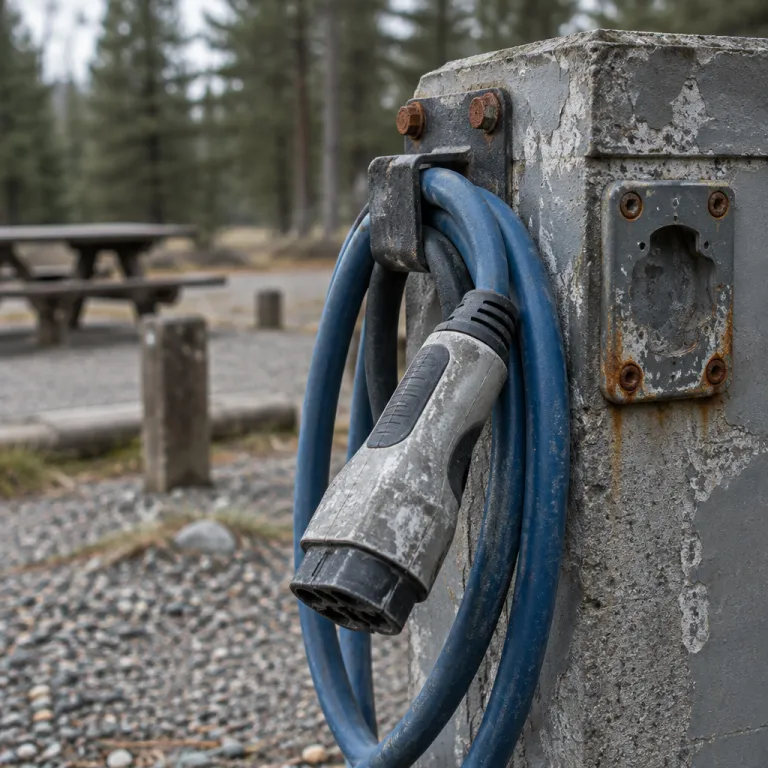
How the EV charging divide reshapes premium campground trips
Luxury road trips now hinge on one unglamorous detail: whether a campground will actually allow charging for your electric car. The Camp and Charge Report, which examined 504 campgrounds across the United States and Canada, shows a sharp split in ev charging campground policy 2026 that every couple planning a romantic escape needs to read carefully. For guests who expect seamless power at every site, that divide can turn a dream trip into a stressful detour.
Across these parks, only about 15 percent of properties allow charging directly at the campsite, while 46 percent offer some form of dedicated charging stations on the grounds and 39 percent enforce a strict charging policy that prohibits any electric vehicle charging. This three way split means your choice of campground is no longer just about the view from your site or the distance to the nearest national park, but also about whether charging options match your vehicle’s needs and your tolerance for range anxiety. When you book through a premium platform, the most valuable amenity may be a clearly explained charging station map rather than a welcome basket.
For couples driving electric vehicles, the new luxury is predictability, not just plush linens or a riverside park setting. A high end campground that offers a dedicated level charger at each pedestal, transparent metered billing for every charge, and clear rules about charging allowed at RV hookups removes guesswork from the trip. In contrast, a beautiful park with no chargers, limited electrical capacity, and a vague charging policy can leave guests juggling apps, public stations, and short term top ups instead of enjoying overnight charging under the stars.
Three types of EV policies you will actually encounter on site
When you zoom in on individual campgrounds, ev charging campground policy 2026 falls into three distinct patterns that matter far more than the marketing photos. The first group is the most guest friendly for electric drivers ; these parks allow charging at the campsite, usually by treating the electrical pedestal as a shared resource with clear limits on power draw and time. For couples who want to plug in, cook dinner, and forget about range anxiety until morning, this overnight charging model feels closest to a traditional hotel stay.
The second group of campgrounds has invested in dedicated charging stations, often near the entrance or main amenity block, and they frame this dedicated charging as a premium but optional service. Here, park owners typically install a mix of level chargers and a few fast chargers, then use metered billing or session based pricing so that guests pay for each charge separately from their nightly rate. This approach suits travelers who are comfortable parking at a charging station for an hour, then moving back to their site once the charger has done its work.
The third group is the most challenging for electric vehicle guests, because these campgrounds prohibit any camp charge at the pedestal and do not provide a single charging station on site. Their charging policy usually points guests toward public stations in nearby towns or highway rest areas, which can work for a short term stay but adds friction to a longer romantic trip. If you are planning a multi park itinerary, this is where a specialist guide such as the analysis in one in four campers now drives an EV becomes essential reading before you lock in non refundable bookings.
Location, infrastructure costs and why some parks still say no
Behind every ev charging campground policy 2026 sits a spreadsheet, not just a sustainability statement. Campgrounds close to interstate corridors or clustered near dense public charging networks often feel less pressure to install their own chargers, because guests can charge en route and arrive with a comfortable buffer. Remote destination parks, especially those far from any existing charging station, face a different calculus ; they either invest in on site power upgrades or risk losing a growing share of electric driving guests.
Upgrading electrical capacity is not a small decision for park owners who run seasonal businesses with tight margins and fluctuating occupancy. Installing multiple level chargers, a few fast chargers, and the dedicated level wiring to support them can require trenching, new panels, and sometimes a new transformer, all of which push up the cost per site. The question of who pays for this infrastructure — the park through higher nightly rates, or the guests through metered billing at each charging station — is already shaping how premium campgrounds position their pricing tiers, as tracked in resources such as the campground pricing index.
Some parks respond by keeping charging options simple and limited, perhaps with one shared charger near the office and a strict rule that no charging is allowed at individual pedestals. Others lean into dedicated charging as a revenue stream, bundling a guaranteed level charger with riverfront sites or glamping tents and marketing overnight charging as part of a premium package. For couples choosing between similar campgrounds, the difference between a park that treats EV charging as a reluctant add on and one that integrates it into the guest experience can be the deciding factor.
How luxury booking platforms should decode EV charging policies
For a luxury and premium booking website, ev charging campground policy 2026 is no longer a footnote ; it is a core filter alongside hot tubs and king size beds. The most useful platforms translate technical electrical details into clear guest facing language, explaining whether each site includes a level charger, whether charging is allowed at the RV pedestal, and whether fast chargers are available for a quick top up before a long driving day. When this information is missing, couples are forced to call individual campgrounds or read between the lines of vague amenity lists.
Smart booking tools now tag campgrounds by charging options, distinguishing between properties with dedicated charging stations, those that simply allow charging from existing hookups, and those where no charging is allowed at all. A refined search might highlight parks that guarantee overnight charging at every site, offer metered billing with transparent per kilowatt hour rates, and maintain at least one dedicated level charger for guests who arrive nearly empty. This level of clarity reduces range anxiety before the trip even begins and lets travelers focus on choosing the right landscape, whether that is a forested park in Oregon or a coastal campground in Nova Scotia.
To match the expectations of discerning guests, premium platforms also need to show how EV infrastructure fits into the broader sense of place. A romantic glamping stay where the charging station is tucked discreetly behind native plantings feels different from a gravel lot lined with generic chargers and no shade. Thoughtful editorial content — for example, pairing EV ready campgrounds with guides to elevated outdoor comforts such as the eco focused gear covered in this hammock bug netting feature — helps guests imagine a trip where technology supports, rather than dominates, the experience.
Designing smart campground features for connected, electric stays
The most forward looking parks treat ev charging campground policy 2026 as part of a broader shift toward smart campground features, not a standalone upgrade. These properties weave sensors, connected pedestals, and app based controls into the fabric of each site, so that guests can monitor their charge, track power use, and even schedule overnight charging from their phones. For couples who already manage their homes and cars through apps, this level of control feels intuitive rather than tech heavy.
On a practical level, smart pedestals let park owners balance electrical capacity across campgrounds, avoiding overloads when several guests plug in level chargers at once. Dynamic metered billing can adjust the price of a charge based on time of day or total demand, encouraging guests to shift heavy charging to off peak hours while still enjoying all the comforts of a premium campground. When combined with clear messaging about which sites include dedicated charging and which rely on shared charging stations, this technology turns a potential pain point into a quietly efficient service.
For travelers, the benefit is a smoother trip with fewer surprises and less range anxiety between parks. A couple might book a string of campgrounds where each charging station is mapped in the app, each level charger is reserved with their site, and each camp charge session is logged for easy expense tracking. In this context, charging options become part of the romance of the journey — a quick walk to the charger at dusk, a glass of wine while the car sips power, and the reassurance that tomorrow’s scenic drive will start with a full battery.
Planning an EV friendly romantic road trip across multiple parks
For couples plotting a multi stop itinerary, the most successful trips start with a careful read of ev charging campground policy 2026 across every planned campground. Begin by mapping your route between parks, then layer in public charging stations and the specific charging options at each property, noting where dedicated charging is guaranteed and where no charging is allowed on site. This planning phase may feel technical, but it frees you to be spontaneous once you are actually on the road.
When comparing campgrounds, look beyond whether they simply have chargers and focus on how those chargers fit your travel rhythm. If you prefer long, lazy mornings, prioritize parks that offer overnight charging at your site through a level charger on the pedestal, so the car is ready whenever you are. If your days are built around early departures and long drives, consider campgrounds with a mix of fast chargers and level charging stations near the exit, so you can top up quickly before moving on.
Finally, treat communication as part of your packing list, especially when staying at smaller campgrounds that are still refining their charging policy. A quick email asking whether charging is allowed at the pedestal, whether metered billing applies to every charge, and whether the electrical capacity can support both your RV and your electric car will clarify expectations on both sides. With that groundwork in place, your trip can focus on the essentials — the quiet of a dark sky park, the comfort of a well designed site, and the subtle satisfaction of knowing that every camp charge along the way has been thoughtfully planned.
Key figures behind the EV charging divide
- The Camp and Charge Report found that 15 percent of the 504 surveyed campgrounds allow charging directly at the campsite, meaning guests can plug into the electrical pedestal at their own site without using a separate charging station.
- According to the same report, 46 percent of campgrounds have installed dedicated charging stations on property, often with a mix of level chargers and a smaller number of fast chargers to support different charging options.
- About 39 percent of surveyed parks prohibit EV charging entirely, a charging policy that forces guests to rely on off site public chargers and can significantly increase range anxiety for longer trips.
- Campgrounds located near dense public charging networks are statistically more likely to delay investment in on site chargers, while remote destination parks are more likely to explore metered billing and dedicated level chargers to attract electric vehicle guests.
- Industry data from North American campground associations shows that properties adding EV infrastructure often report higher average nightly revenue, as park owners bundle guaranteed overnight charging with premium sites or glamping units.
FAQ about EV charging policies at campgrounds
How can I check whether a campground allows EV charging at my site ?
Always read the ev charging campground policy 2026 section on the booking page, then confirm directly with the property. Ask whether charging is allowed at the electrical pedestal on your site, whether there are any extra fees or metered billing, and whether a dedicated level charger is reserved for you or shared among guests.
What is the difference between level charging and fast charging at campgrounds ?
Level charging usually refers to Level 2 chargers that provide a steady charge suitable for overnight charging at a campground, often using the same power supply as RV hookups. Fast chargers deliver much higher power for short term top ups, but they are more expensive to install and are typically located at a central charging station rather than at individual sites.
Why do some campgrounds prohibit EV charging entirely ?
Some parks have limited electrical capacity and worry that allowing EV charging at pedestals could overload their systems, especially during peak season. Others are still evaluating the cost of installing dedicated charging stations, so their current charging policy directs guests to public chargers off site until they can upgrade their infrastructure.
How should I plan a road trip if some parks on my route have no chargers ?
When a campground does not offer any charging options, plan your trip so that you arrive with enough battery to reach the next public charging station after your stay. Use mapping tools to locate chargers near each park, schedule a camp charge at properties that offer overnight charging, and build in extra time for a fast charger stop between remote campgrounds.
Do luxury and premium campgrounds usually charge extra for EV use ?
Many premium campgrounds treat EV charging as a separate service, using metered billing or flat session fees at each charging station to cover the cost of power and infrastructure. Some high end parks bundle a dedicated charger and unlimited overnight charging into their top tier sites, while others keep nightly rates lower and charge per kilowatt hour instead.